Blog/best milk brands in India
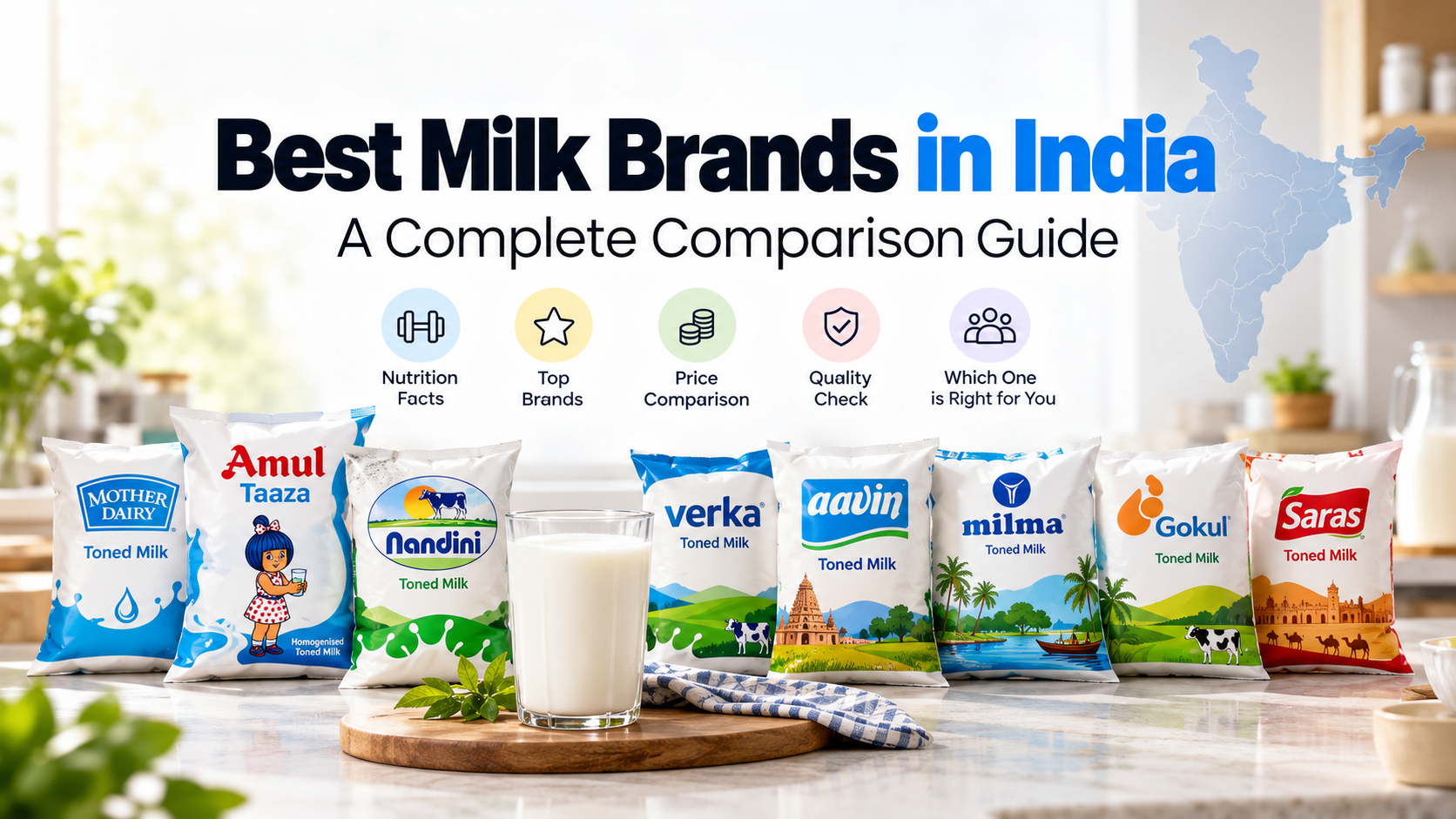
Best Milk Brands in India: A Complete Comparison Guide
Rishab Chhetri
Choosing the right milk for your family is not just about the brand on the packet. It is about quality, nutrition, freshness, and finding the right fit for your daily needs.
Milk is one of the most frequently purchased items in Indian households. It goes into morning tea, coffee, breakfast, smoothies, curd, paneer, and countless everyday recipes. Yet, when standing in front of a refrigerator filled with milk packets, many consumers face the same question: Which milk brand is actually the best?
Amul, Mother Dairy, Nandini, Verka, Aavin, and several regional dairy brands have built strong reputations across India. But the best choice for one household may not be the best for another.
Some families prefer rich, creamy milk. Others prioritise affordability, easy availability, or a lighter option for everyday consumption.
This guide compares some of the leading milk brands in India, explains the differences between milk varieties, and helps you make a more informed purchasing decision.
Quick Comparison: Best Milk Brands in India
Milk brand | Best known for | Ideal for |
|---|---|---|
Amul | Wide product range and national availability | Households seeking multiple milk options |
Mother Dairy | Strong presence in Delhi NCR and northern India | Everyday household consumption |
Nandini | Regional dairy network and value-oriented options | Consumers in Karnataka and nearby markets |
Verka | Cooperative dairy products and regional availability | Households in Punjab and surrounding areas |
Aavin | Established dairy cooperative presence | Consumers in Tamil Nadu |
Milma | Regional dairy cooperative network | Consumers in Kerala |
Gokul | Cooperative dairy products | Consumers in Maharashtra and surrounding markets |
Saras | Regional dairy products | Consumers in Rajasthan |
Important: This is a practical comparison of established brands, not a definitive laboratory-tested ranking. Availability, product quality, price, and individual preferences vary by location and product variant.
1. Amul: A Strong All-Round Choice
Amul is one of India's most recognisable dairy brands, with a broad portfolio that includes milk, butter, cheese, paneer, curd, and other dairy products.
Its milk range includes options such as Amul Gold, Amul Taaza, and other variants, depending on the market.
Why consider Amul?
A wide selection of milk varieties for different household needs.
Extensive distribution across many parts of India.
Familiar branding and a broad dairy product ecosystem.
Options suited to consumers who prefer either richer or lighter milk.
Potential limitation: The specific variants available, their prices, and delivery options differ between cities.
Best for: Families who want a familiar brand with multiple milk choices and broad availability.
2. Mother Dairy: A Popular Choice in Delhi NCR
Mother Dairy has a strong presence in Delhi NCR and several other markets. It is known for its packaged milk and a wider portfolio of dairy and food products.
Its milk range includes options such as full cream, toned, and other variants, depending on local availability.
Why consider Mother Dairy?
Strong regional distribution, particularly in northern India.
Convenient access through retail outlets and delivery channels in supported areas.
Multiple milk varieties for different household preferences.
An established presence in everyday dairy consumption.
Potential limitation: Availability outside its stronger markets may be less convenient than that of nationally distributed brands.
Best for: Households in Delhi NCR looking for a convenient option for daily milk consumption.
3. Nandini: A Major Choice in Karnataka
Nandini is the dairy brand associated with the Karnataka Milk Federation, a cooperative institution serving dairy producers and consumers.
It offers a range of dairy products, including packaged milk varieties.
Why consider Nandini?
A well-established regional cooperative brand.
A range of products suited to everyday household consumption.
Strong familiarity and distribution in Karnataka.
A practical option for consumers comparing locally available dairy products.
Potential limitation: Its availability and range of variants may be more limited in some parts of India.
Best for: Consumers in Karnataka who value a familiar regional dairy cooperative.
4. Verka: A Recognised Dairy Brand in Punjab
Verka is associated with the Punjab State Cooperative Milk Producers' Federation and its network of dairy cooperatives.
The brand offers milk and other dairy products, including richer milk varieties.
Why consider Verka?
Established regional presence in Punjab.
A cooperative dairy model.
Multiple dairy products for household use.
A relevant option for consumers comparing established regional brands.
Potential limitation: Availability outside northern India can vary considerably.
Best for: Households in Punjab and nearby markets seeking an established local dairy brand.
5. Aavin: An Established Choice in Tamil Nadu
Aavin is associated with the Tamil Nadu Cooperative Milk Producers' Federation. It is a familiar dairy brand in Tamil Nadu and serves consumers through its regional distribution network.
Why consider Aavin?
Established presence in Tamil Nadu.
Packaged milk options for daily household use.
A regional cooperative structure.
Familiarity among local consumers.
Potential limitation: Distribution and product selection may vary outside Tamil Nadu.
Best for: Households in Tamil Nadu looking for an established regional dairy option.
6. Milma: A Regional Favourite in Kerala
Milma is the consumer-facing dairy brand of the Kerala Cooperative Milk Marketing Federation.
Its product portfolio includes packaged milk and other dairy products for consumers in Kerala.
Why consider Milma?
Established regional dairy distribution.
Familiarity with local consumers.
Multiple dairy products for everyday needs.
A cooperative-based dairy network.
Potential limitation: Product availability outside Kerala and neighbouring markets may be limited.
Best for: Consumers in Kerala who prefer a familiar regional brand.
7. Gokul: A Cooperative Dairy Option in Maharashtra
Gokul is associated with the Kolhapur District Cooperative Milk Producers' Union and has a recognised presence in Maharashtra.
It offers packaged milk and a variety of other dairy products.
Why consider Gokul?
Established cooperative dairy operations.
A familiar brand in its core markets.
Milk options for everyday consumption.
An alternative worth comparing with other locally available brands.
Potential limitation: Its distribution footprint varies across India.
Best for: Consumers in Maharashtra and nearby markets where Gokul products are readily available.
8. Saras: A Regional Option in Rajasthan
Saras is a dairy brand associated with Rajasthan's cooperative dairy network.
It offers milk and other dairy products through its regional distribution channels.
Why consider Saras?
Established presence in Rajasthan.
A regional cooperative dairy option.
Availability of products suited to daily household needs.
A useful alternative when comparing local prices and freshness.
Potential limitation: Its product range and distribution may be less accessible in other regions.
Best for: Consumers in Rajasthan who want to compare established local dairy options.
Milk Brand Comparison at a Glance
The right brand depends on more than recognition. Consider these factors before choosing.
Factor | What to look for |
|---|---|
Availability | Can you buy it consistently in your locality? |
Milk variety | Does it offer the fat level you prefer? |
Freshness | Is the product properly stored and within its date? |
Price | What is the cost per litre for your chosen variant? |
Packaging | Is the packet or container sealed and undamaged? |
Convenience | Is home delivery or reliable retail access available? |
Product information | Are the ingredients, nutrition information, and required declarations clearly displayed? |
A national brand is not automatically better than a regional cooperative. Both can be reasonable choices when the product meets applicable standards and is handled correctly.
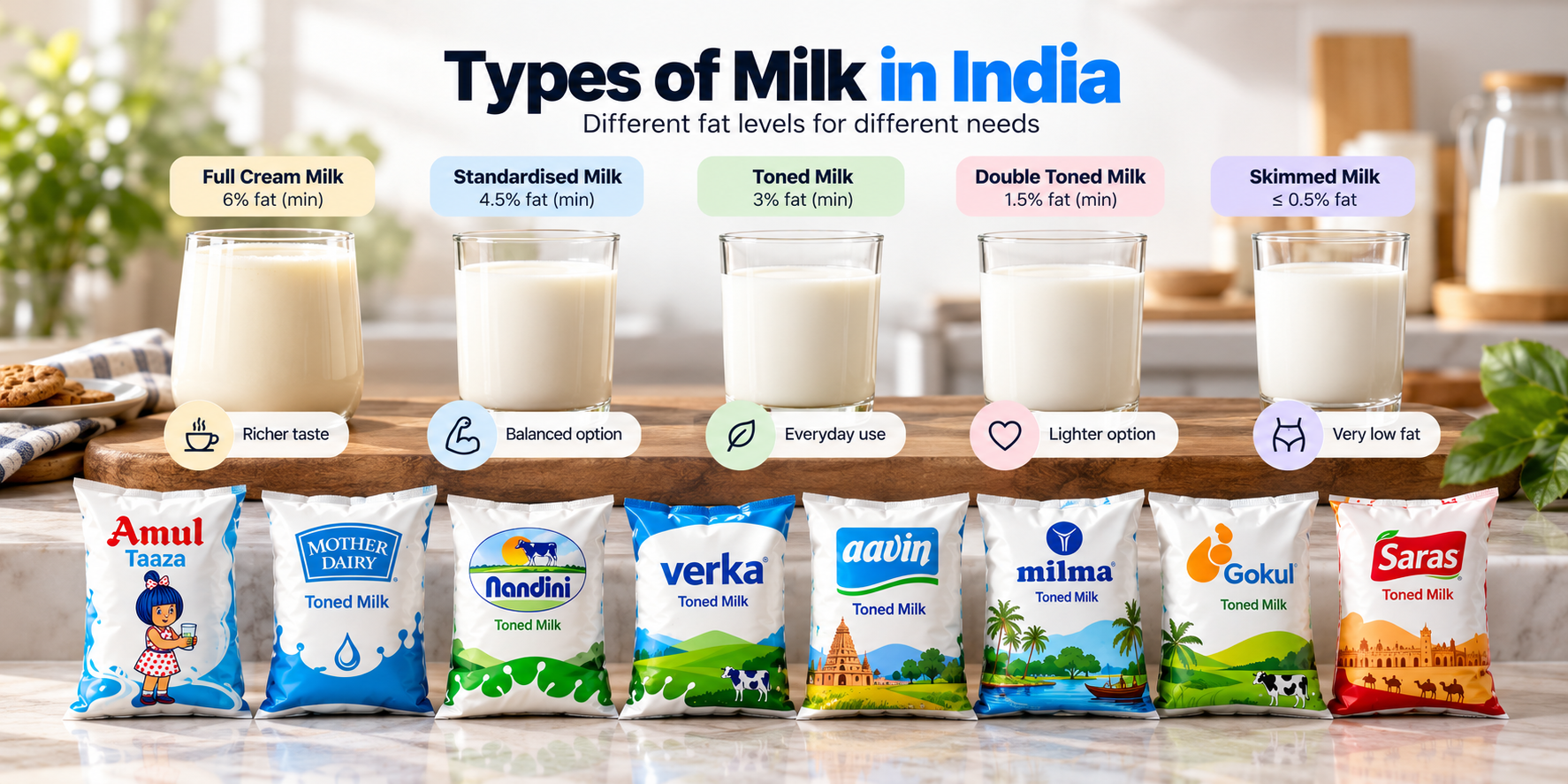
9. Understanding Different Types of Milk
One of the most important parts of choosing milk is understanding the difference between its varieties.
Two packets from the same brand can have different nutritional compositions because they belong to different milk categories.
Full Cream Milk
Full cream milk contains more milk fat than toned milk and is generally preferred by consumers who enjoy a richer taste.
Under India's food standards, full cream milk has a minimum milk fat content of 6% and milk solids-not-fat content of 9%.
Best suited for: People who prefer a richer texture, creamy beverages, and certain traditional recipes.
Standardised Milk
Standardised milk offers a defined fat and milk solids-not-fat composition.
Under the applicable Indian standard, it contains a minimum of 4.5% milk fat and 8.5% milk solids-not-fat.
Best suited for: Consumers who prefer a relatively rich milk option without choosing full cream milk.
Toned Milk
Toned milk contains less fat than full cream milk while retaining substantial milk solids.
The Indian standard specifies a minimum of 3% milk fat and 8.5% milk solids-not-fat.
Best suited for: Everyday household use, including tea, coffee, cereal, and drinking.
Double Toned Milk
Double toned milk has a lower fat content than toned milk.
The Indian standard specifies a minimum of 1.5% milk fat and 9% milk solids-not-fat.
Best suited for: Consumers who prefer a lighter milk option.
Skimmed Milk
Skimmed milk has most of its milk fat removed. Under the Indian standard, its milk fat content must not exceed 0.5%, with a minimum of 8.7% milk solids-not-fat.
Best suited for: Consumers who specifically want milk with very little fat.
These values come from India's Food Safety and Standards regulations. They describe milk categories, not a ranking of brands.
10. Which Milk Is Best for Different Needs?
Instead of searching for one universally superior brand, begin with your household's requirements.
Your requirement | What to consider |
|---|---|
Daily family consumption | Toned or standardised milk, depending on preference |
Rich taste and creamy beverages | Full cream milk |
Lower-fat preference | Double toned or skimmed milk |
Tea and coffee | Choose according to taste and desired creaminess |
Making curd or paneer | Consider the recipe, milk composition, and desired yield |
Budget-conscious shopping | Compare local prices per litre and actual product specifications |
Convenient daily delivery | Choose a reliable brand with consistent local availability |
A useful distinction: Lower-fat milk is not automatically healthier for every person, and full cream milk is not automatically better because it contains more fat. Your nutritional requirements, total diet, age, and health circumstances all matter.
For individual dietary restrictions or specific medical needs, consult an appropriately qualified healthcare professional.
11. How to Check Milk Quality Before Buying
A trusted brand matters, but storage and handling matter too.
Milk can deteriorate if it is exposed to unsuitable temperatures or handled improperly after processing.
Use this checklist when purchasing packaged milk:
Check the packaging. Avoid packets that are leaking, swollen, damaged, or improperly sealed.
Check the date. Read the use-by or expiry information and follow the manufacturer's storage instructions.
Check refrigeration. Pasteurised milk that requires refrigeration should be purchased from a retailer that stores it appropriately.
Read the label. Check the milk category, fat content, nutrition information, ingredients, and relevant food business details.
Store it promptly. Refrigerate milk as directed after purchase. Do not leave it at room temperature for extended periods.
Follow the preparation instructions. Pasteurised milk and UHT milk have different storage requirements. Refrigerate products after opening as instructed, and boil milk when appropriate for the product and local handling conditions.
It is also important to understand that appearance, smell, and taste cannot reliably establish whether milk is free from every harmful microorganism or adulterant.
12. Is Expensive Milk Always Better?
Not necessarily.
A higher price may reflect factors such as processing, packaging, distribution, brand positioning, or a specific product category. It does not, by itself, prove that one milk product is safer or nutritionally superior to another.
Likewise, a lower-priced product is not automatically inferior.
For a fair comparison, compare products within the same category. For example, compare toned milk with toned milk rather than comparing toned milk from one brand with full cream milk from another.
Look at the price per litre, fat content, milk solids, storage requirements, and reliability of local supply.
When comparing organic, A2, or premium milk products, also examine what the label actually establishes. A premium claim should not be treated as proof of superior overall nutrition or safety without appropriate evidence.
13. National Brands vs Regional Dairy Brands
India's dairy market has a mix of national brands and regional cooperative brands. Each can offer practical advantages.
Nationally distributed brands may be more convenient for consumers who move between cities or want access to a broad range of products.
Regional dairy brands can be strong choices where they have established collection, processing, and distribution networks. They may also offer convenient access to products familiar to local consumers.
Neither category automatically guarantees better quality.
A better comparison considers the specific product, its applicable standards, its handling, its price, and the reliability of supply in your area.
Frequently Asked Questions
Which is the best milk brand in India?
There is no single brand that is best for every consumer. Amul and Mother Dairy are useful options to compare in many northern markets, while Nandini, Verka, Aavin, Milma, Gokul, and Saras are important regional alternatives. Availability and product specifications should guide the final choice.
Is Amul better than Mother Dairy?
Not universally. Both offer multiple milk varieties, and the comparison depends on the specific products, prices, availability, and storage conditions in your area.
Which milk is best for daily consumption?
For many households, pasteurised toned or standardised milk can be practical choices. The best option depends on individual nutritional needs, taste preferences, and the rest of the diet.
Is full cream milk better than toned milk?
Full cream milk contains more fat, while toned milk contains less. Neither is automatically superior for everyone. Choose according to your nutritional requirements and intended use.
Are regional milk brands reliable?
A regional brand can be a reasonable choice if its products comply with applicable standards and are processed, transported, and stored correctly. Brand reputation alone should not replace checking the product and its handling.
How can I tell whether packaged milk is safe?
Buy from a reliable retailer, check the seal and date, verify that the product has been stored according to its instructions, and follow the label's preparation and storage guidance. No visual check can guarantee the absence of every food safety risk.
Final Verdict: Choose the Milk That Fits Your Needs
The best milk brand is not necessarily the most expensive or the most widely advertised. It is the one that offers the right product for your household, is available consistently, is handled properly, and provides good value for money.
If you live in Delhi NCR, comparing Amul and Mother Dairy is a practical starting point. In Karnataka, Nandini deserves consideration. In Punjab, Verka may be a convenient option. In Tamil Nadu, Aavin is worth comparing, while Milma, Gokul, and Saras are relevant choices in their respective regional markets.
Ultimately, focus on three things: the type of milk you need, the quality of the specific product, and the reliability of its storage and supply.
Make that comparison carefully, and you will be better equipped to choose milk that works for your family rather than relying on brand popularity alone.
Sources and Further Reading
Food Safety and Standards Authority of India (FSSAI), Food Product Standards and Regulations.
FSSAI, Food Safety and Standards Regulations and Compendium.
Department of Consumer Affairs, Government of India, Comparative Test of Packaged Full Cream Milk.
Editorial note: Brand descriptions are intended as a practical consumer overview. Product availability and prices change by location. The cited government comparative test is not a current, comprehensive ranking of all milk brands or variants available in India. Check current labels and local prices before making a purchasing decision.